How I Stopped Chasing Quick Wins and Started Winning with Calm Confidence
What if the biggest obstacle to growing your income isn’t your portfolio—but your mindset? I used to check my investments hourly, panic at every dip, and jump on trends without thinking. Then I realized: real financial growth starts long before you click "buy." It starts in your head. This is the story of how shifting my thinking—away from fear and greed—transformed my approach to investing and finally brought the results I’d been chasing. It wasn’t a new strategy or a secret fund that changed everything. It was learning to sit still when every instinct screamed to act. That small shift in perspective unlocked consistency, reduced costly mistakes, and allowed compounding to do its quiet work. This isn’t about getting rich overnight. It’s about building wealth that lasts—by mastering the one thing no market report can measure: your mind.
The Moment Everything Changed: Facing My Financial Fears
It happened on an otherwise ordinary Tuesday morning. I was sipping tea, glancing at my phone, when a red alert flashed across my screen: the market had dropped nearly 4% overnight. My stomach dropped with it. I hadn’t lost any money—my portfolio was still ahead for the year—but the sight of those plunging numbers triggered something deep and primal. Within minutes, I was selling shares of a solid dividend stock, not because the fundamentals had changed, but because I couldn’t bear the thought of watching gains evaporate. That moment became a mirror. I wasn’t managing money; I was managing emotions in disguise. The truth was uncomfortable: I had confused activity with progress and urgency with intelligence. I believed that by reacting quickly, I was protecting my future. In reality, I was undermining it. Studies from behavioral economists like Daniel Kahneman and Amos Tversky have long shown that people feel the pain of a loss about twice as strongly as the pleasure of an equivalent gain—a phenomenon known as loss aversion. That morning, I wasn’t an investor. I was a victim of my own wiring.
What followed was a period of reflection, not over charts or quarterly reports, but over my habits, triggers, and decision patterns. I began to notice how often I checked my brokerage account—not to review strategy, but to soothe anxiety. Each time the market inched up, I felt a small rush of pride. Each dip brought dread. My self-worth had become entangled with my portfolio balance, a dangerous fusion for any long-term investor. The real risk wasn’t volatility; it was my inability to tolerate it. This emotional dependency made me reactive, and reactivity is the enemy of sound financial planning. I realized then that financial success wasn’t just about picking the right assets. It was about cultivating the right mindset—the kind that allows you to make decisions based on logic, not fear. That awareness didn’t fix everything overnight, but it planted a seed. For the first time, I understood that before I could grow my wealth, I had to grow my emotional resilience.
Why Your Brain Is Wired to Lose Money (And How to Rewire It)
Human brains evolved to survive in environments where quick decisions meant the difference between life and death. Today, that same wiring often works against us in the financial world. We are not naturally built to be calm, long-term investors. Our minds crave immediate feedback, avoid discomfort, and seek patterns—even when none exist. This creates a perfect storm for poor financial decisions. Take confirmation bias, for example. This is the tendency to favor information that supports what we already believe and ignore evidence that contradicts it. If you buy a stock because you believe the company is destined for greatness, you’re more likely to celebrate every positive headline and dismiss warning signs. This selective attention creates a false sense of confidence and delays necessary course corrections.
Another powerful force is the dopamine-driven reward system. Every time we make a trade that goes our way, our brain releases dopamine—the same chemical involved in pleasure and addiction. This creates a feedback loop: we take a risk, it pays off, we feel good, and we want to do it again. Over time, this can turn investing into a form of emotional gambling, where the thrill of being right matters more than the health of the portfolio. The danger isn’t in making occasional trades; it’s in mistaking excitement for strategy. Behavioral finance research has shown that individual investors underperform the market largely because of poor timing—buying high out of excitement and selling low out of fear. A study by DALBAR, for instance, found that over a 20-year period, the average equity fund investor earned less than half the return of the S&P 500, not because of bad funds, but because of bad behavior.
The good news is that awareness is the first step toward change. You don’t need to eliminate these biases—they’re part of being human. But you can design systems that reduce their influence. One effective method is the pre-commitment strategy: deciding in advance how you’ll respond to different market conditions. For example, you might commit to holding a stock for at least five years regardless of short-term swings, or to rebalancing your portfolio only once per quarter. These rules act as guardrails, helping you stay on track when emotions run high. Another tool is the decision journal—writing down the rationale for each investment before making it. Later, when reviewing your choices, you can see whether emotions influenced your actions. Over time, this builds self-awareness and accountability. Rewiring your brain isn’t about becoming emotionless. It’s about creating space between impulse and action, so you can choose wisely instead of reacting automatically.
The Calm Investor’s Edge: What Staying Cool Actually Buys You
Imagine two investors, both starting with $50,000 and earning an average annual return of 7% over 20 years. On paper, they should end up in the same place. But one panics during market downturns, sells at lows, and buys back at highs. The other stays the course, ignores the noise, and reinvests dividends. At the end of two decades, the calm investor has nearly $100,000 more. This isn’t speculation—it’s math shaped by behavior. The edge of the calm investor isn’t superior knowledge or insider access. It’s emotional discipline. By avoiding panic-driven trades, they keep their costs low, their tax burden manageable, and their compounding uninterrupted. In finance, consistency often beats brilliance. The market rewards those who can endure short-term discomfort for long-term gain.
Consider the power of compounding. A 7% annual return turns $10,000 into over $76,000 in 30 years—with no additional contributions. But if an investor misses just the 10 best market days during that period, the final value drops by nearly half. Most of those big up days occur immediately after sharp declines—exactly when fear is highest and selling temptation strongest. The investor who stays put captures those rebounds. The one who flees does not. This is why emotional control is not a soft skill—it’s a financial multiplier. It doesn’t guarantee profits, but it dramatically increases the odds of achieving them. It also reduces the psychological toll of investing. When you’re not constantly second-guessing yourself, you sleep better, make clearer decisions, and maintain a healthier relationship with money.
Moreover, calmness creates space for better judgment. When emotions run high, the brain’s prefrontal cortex—the area responsible for rational thinking—becomes less active. In contrast, staying composed allows you to assess situations objectively, weigh trade-offs, and act with intention. This doesn’t mean ignoring risk or pretending the market is always safe. It means responding to reality rather than reacting to fear. A disciplined investor doesn’t deny uncertainty; they plan for it. They understand that volatility is not the enemy—poor decisions made during volatile times are. By cultivating calm, you gain a rare advantage: the ability to act when others are paralyzed. In the long run, that quiet strength compounds just like money.
Building Your Mental Toolkit: Practical Habits That Stick
Changing your mindset doesn’t require grand gestures. It begins with small, repeatable habits that build resilience over time. One of the most effective is setting decision rules in advance. For example, decide now that you will not check your portfolio more than once per month. Or commit to holding any investment for a minimum of three years unless the company’s fundamentals deteriorate. These rules remove emotion from the equation by shifting decisions from the heat of the moment to a time of clarity. They act like a financial prenuptial agreement—protecting you from your future self when stress or excitement clouds your judgment.
Another powerful habit is scheduling fixed review times. Instead of reacting to every market headline, pick a day each quarter to assess your portfolio. Use that time to evaluate performance, rebalance if needed, and confirm alignment with your goals. Outside of those times, treat your investments like a slow-cooking stew—best left undisturbed. This practice reduces anxiety, prevents overtrading, and helps you focus on what truly matters: long-term progress. Research shows that frequent monitoring increases stress and leads to worse outcomes. A study published in the journal Management Science found that investors who received monthly performance updates traded more and earned lower returns than those who saw updates only once a year.
Checklists are another simple but transformative tool. Before making any investment change, run through a written list: Have I reviewed the company’s financials? Am I reacting to news or long-term trends? Does this align with my overall strategy? Is my decision influenced by recent gains or losses? These questions create friction—a pause that disrupts impulsive behavior. Pilots use checklists to avoid fatal errors. Surgeons use them to prevent mistakes. Why shouldn’t investors? The goal isn’t perfection. It’s consistency. No system is foolproof, but structure reduces the likelihood of costly errors. Over time, these habits become second nature, forming a mental framework that supports wise decisions even under pressure.
Reframing Risk: It’s Not the Market—It’s How You See It
Most people define risk as the chance that their investments will lose value. But for the individual investor, the greater danger often lies not in market fluctuations, but in their own behavior. True risk is the probability that you’ll make a poor decision when stressed—selling low, chasing hype, or abandoning a sound plan. This behavioral risk is invisible on a balance sheet but shows up clearly in long-term results. A diversified portfolio can protect against market volatility, but only discipline can protect against emotional overreaction.
Reframing risk changes how you prepare. Instead of trying to predict the market, you focus on preparing your mind. One way to do this is through pre-commitment strategies. Decide now how you’ll respond to a 10%, 20%, or 30% market drop. Write it down. Share it with a trusted friend. This transforms abstract intentions into concrete plans. For example, you might commit to viewing a market decline as an opportunity to buy quality assets at a discount, rather than a signal to flee. Having a plan in place reduces the paralysis that often follows uncertainty.
Another approach is the “if-then” rule. If the market drops 15%, then I will review my portfolio calmly and stick to my allocation. If a friend brags about a hot stock tip, then I will thank them but remind myself of my strategy. These conditional statements act as mental scripts, guiding behavior when emotions run high. They don’t eliminate fear or temptation, but they provide a roadmap for navigating them. Over time, this shift in perspective—from fearing the market to managing your reactions—builds confidence. You stop seeing volatility as a threat and start seeing it as a feature of the system. Markets go up and down. That’s normal. What matters is how you respond. By treating your mindset as your primary line of defense, you gain control over the one factor that truly determines long-term success: your decisions.
The Long Game Mentality: Why Slow Gains Feel Like Real Wins
In a world obsessed with speed, slow growth is often overlooked. We’re drawn to stories of overnight millionaires and explosive stock rallies. But real wealth—the kind that lasts—is usually built quietly, over time, through consistency. Consider the power of a 7% annual return. It doesn’t feel exciting. It won’t make headlines. But over 30 years, it turns $10,000 into more than $76,000. Add monthly contributions of $300, and the total exceeds $380,000. This isn’t magic. It’s compounding—growth building on growth, year after year. The investors who benefit most from this force aren’t the ones making bold bets. They’re the ones who stay put, reinvest dividends, and avoid derailing the process with emotional trades.
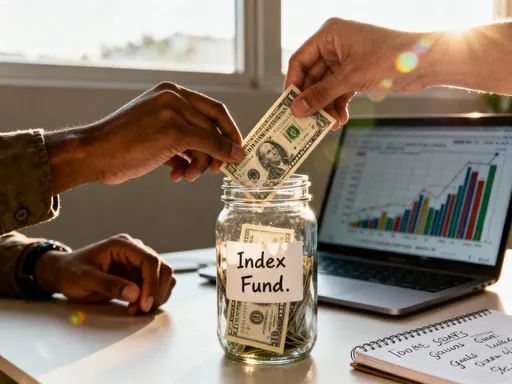
Many of the most reliable wealth-building strategies seem boring by design. Index funds, for example, simply track the market. They don’t promise to beat it. Yet, over decades, they’ve outperformed the majority of actively managed funds. Why? Because they’re low-cost, diversified, and immune to manager ego or market timing errors. Similarly, dividend reinvestment plans allow investors to buy more shares automatically, turning passive income into long-term growth. These strategies don’t require constant attention or perfect predictions. They require patience and trust in the process.
The long game also changes how you define success. Instead of measuring progress by daily gains, you focus on milestones like sticking to your budget, avoiding impulsive trades, or maintaining a balanced portfolio through turbulence. These non-financial wins build confidence and reinforce good habits. Over time, you begin to take pride not in how much money you make, but in how wisely you manage it. When you finally look back after 10 or 20 years, the results speak for themselves. What once seemed slow now looks like mastery. The quiet path, it turns out, is often the fastest way to lasting financial security.
Staying the Course: How to Keep Your Head When Everyone Else Loses Theirs
Sustaining discipline over time is the final challenge. Markets will rise. They will fall. News cycles will amplify fear and greed. Friends will share hot tips. Social media will buzz with the latest trend. In those moments, the greatest advantage you can have is a support system rooted in reason, not emotion. One powerful tool is accountability. Share your investment plan with a trusted friend or family member—not to get advice, but to stay honest. Knowing someone else understands your goals makes it harder to stray from them. You’re less likely to chase a meme stock if you know you’ll have to explain it later.
Another key is limiting exposure to noise. Financial media thrives on drama because attention drives clicks. But constant headlines create a distorted view of reality—making rare events seem common and minor fluctuations feel catastrophic. Consider reducing your intake. Unfollow hyperbolic finance accounts. Disable market alerts. Design your environment to support calm, not reactivity. Instead of scrolling through forums where panic spreads like wildfire, read books on investing psychology or listen to thoughtful interviews with long-term investors. These sources reinforce patience and perspective.
Finally, celebrate the right behaviors. When you resist the urge to sell during a downturn, acknowledge it. When you stick to your budget despite temptation, treat it as a win. These moments build identity. You stop seeing yourself as someone who struggles with money and start seeing yourself as a disciplined investor. That shift in self-perception is powerful. It creates momentum. Over time, staying the course becomes not a struggle, but a point of pride. The market will always test your resolve. But with the right habits, mindset, and support, you can meet those tests with clarity and confidence.
Wealth Grows Where Emotions Are Managed
True financial growth isn’t about finding the next hot stock or timing the market perfectly. It’s about mastering your response to uncertainty. The calm investor doesn’t avoid risk; they manage their mind first and their money second. They understand that the greatest threat to wealth isn’t volatility—it’s impulsive decisions made in moments of fear or excitement. By treating emotional control as a skill, not a personality trait, anyone can build lasting financial resilience. The market rewards patience, discipline, and clarity—qualities no algorithm can replicate, but everyone can cultivate. Over time, these qualities compound just like money, creating a foundation for long-term success. The journey isn’t about dramatic moves. It’s about small, consistent choices that add up. When you stop chasing quick wins, you create space for real ones to emerge. And that’s when lasting wealth begins to grow.