I used to kill every plant I touched — until this smart pot changed everything
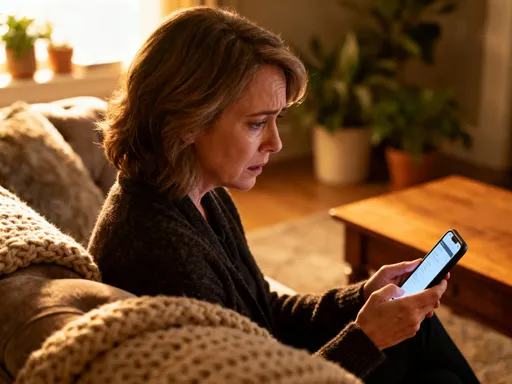
Remember that feeling when you forget to water your plants — again? You walk past the wilting leaves, avoiding eye contact like it’s your guilt made visible. I was that person. Plants didn’t just struggle in my home — they died. I’d buy a beautiful peace lily or a cheerful pothos, full of hope, only to watch it slowly fade into brown, crispy silence. Each one felt like a personal failure. “Maybe I’m just not a plant person,” I’d tell myself, shrugging it off with a laugh that didn’t quite reach my eyes. But deep down, it stung. Then one quiet Saturday, a small package arrived from my sister — a smart pot with a soft glowing light. Skeptical but curious, I gave it a try. What started as a simple fix turned into something bigger — deeper connections, unexpected friendships, and a greener, calmer life. This isn’t just about plants. It’s about how small tech can quietly transform your world.
The Green-Thumb Lie We All Believe
Let’s be honest — most of us carry a little shame when it comes to houseplants. You’re not alone if you’ve ever killed a succulent. That cactus you forgot to water for six months? Yeah, we’ve all been there. Or worse — the overwatered fern that turned into a sad, soggy mess. We look at friends with lush indoor jungles and think, “They must have some kind of magic.” But here’s the truth: having a green thumb isn’t about magic. It’s not even about being naturally gifted. It’s about timing, consistency, and knowing when your plant needs help — something most of us simply can’t track amid busy lives.
I used to believe I was genetically disqualified from plant care. My kitchen windowsill looked like a graveyard. Aloe vera that turned to mush. Spider plants that dropped leaves like confetti at a sad party. I’d tell myself, “I’m too busy,” or “I just don’t have the patience.” But the real issue wasn’t time or focus — it was information. I didn’t know when to water. I couldn’t tell if the soil was dry three inches down. I’d stick my finger in — sometimes too shallow, sometimes too late. And by the time the leaves drooped, it was already over. That cycle of hope, neglect, and quiet disappointment started to feel familiar — almost expected.
What I didn’t realize then was that this struggle is universal. So many of us want to bring life into our homes — to have that little burst of green that makes a space feel warm and alive. But without clear signals, we’re left guessing. And guessing leads to mistakes. The myth that plant care is only for experts keeps people like me on the sidelines, watching from afar. But what if you didn’t have to be an expert? What if a little help — quiet, gentle, non-judgmental — could guide you? That’s where technology stepped in, not to replace intuition, but to give it a boost.
A Gift That Felt Like a Joke
When the box arrived, I almost laughed. It was sleek — modern, even — with smooth ceramic sides and a soft white glow from the base. My sister had written on the card, “No more dead plants. Promise.” I rolled my eyes. I love her, but this felt like the kind of gadget that works for two weeks and then collects dust. I’ve tried smart mops, smart lights, even a smart water bottle that buzzed when I hadn’t drunk enough. Most of them ended up in drawers, forgotten. So I opened the box with low expectations.
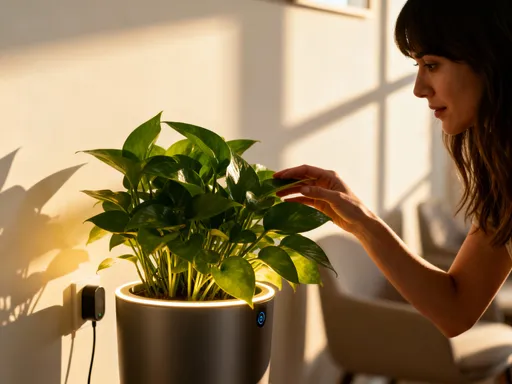
But setting it up was surprisingly easy. I just filled the pot with soil, planted a small peace lily I’d rescued from a discount rack, and poured water into the reservoir at the bottom. The light at the base blinked blue — a welcome sign, the instructions said. No app downloads, no complicated setup. Just plug in the little sensor, place it in the soil, and let it do its thing. The whole process took less than ten minutes. I placed it on my kitchen counter, right by the window where the morning sun hits, and for the first time, I didn’t feel dread. I felt… curious.
The real surprise was how un-intrusive it felt. This wasn’t a robot or a loud alarm. It didn’t demand attention. It just sat there, quietly observing. The light changed color — blue for good, red when the soil was dry. That’s it. No pressure. No guilt. Just a soft signal, like a friend tapping you on the shoulder. “Hey,” it seemed to say, “your plant could use a drink.” I didn’t have to remember. I didn’t have to check. The pot did it for me. And slowly, without realizing it, I started paying attention — not because I had to, but because I wanted to.
How It Works Without Taking Over
You might be thinking — is this just a fancy reminder? And honestly, in a way, yes. But it’s the kind of reminder that understands life. It doesn’t nag. It doesn’t send push notifications every hour. It uses a simple moisture sensor buried in the soil — nothing flashy, nothing complicated. When the soil dries out past a healthy point, the light gently shifts from blue to red. That’s your cue. If you want, you can connect it to an app, but I never bothered. The light was enough.
What I love most is how it fits into my rhythm instead of disrupting it. I’m not someone who thrives on strict routines. Some days I’m up early, watering plants before breakfast. Other days, I don’t get home until after dark. The smart pot doesn’t care. It waits. It watches. It only speaks up when it needs to. And when I do water it, the light slowly returns to blue — a quiet “thank you” from the plant, mediated by tech. It’s not about automation. It’s about awareness. It gives you the right information at the right time, without making you feel like you’re running a science experiment.
And here’s the thing — it doesn’t take control. I still choose the plant. I still decide when to prune, when to rotate the pot for even sunlight, whether to use fertilizer. The tech doesn’t replace care — it supports it. It removes the guesswork, the anxiety of “am I doing this right?” That freedom is priceless. For the first time, I wasn’t afraid to try. I bought a second plant — a small snake plant — and used the same system. Then a third. Each one felt less like a gamble and more like a promise.
From Survival to Thriving: The First Real Success
About six weeks in, something shifted. My peace lily — the one I’d half-expected to die by month’s end — sprouted a new leaf. It wasn’t just surviving. It was growing. I remember leaning in, staring at that tiny green curl pushing through the soil, and feeling a rush of something I hadn’t expected: pride. Not because I’d done anything extraordinary, but because I’d stayed consistent. The pot helped, yes, but I had followed through. I had responded to the red light. I had poured the water. I had kept my end of the quiet agreement.
That little leaf became a symbol. It meant I wasn’t doomed to kill every plant I touched. It meant progress was possible — even for me. I started noticing other changes. The older leaves stayed firm, not drooping at the edges. The stems looked stronger. I found myself pausing at the counter more often, just to look. To check. To smile. That plant became part of my day, not a chore, but a quiet joy. And when a second new leaf appeared, I took a photo — not for social media, but for myself. A record of growth. Of hope.
This wasn’t just about the plant. It was about me. For years, I’d labeled myself as someone who couldn’t keep things alive — plants, sometimes even motivation. But here was living proof that I could. All I needed was a little support. The smart pot didn’t do the work for me — it gave me the confidence to do it myself. And that shift? That’s when things started to change in ways I never expected.
The Unplanned Ripple: Conversations That Bloomed
One morning, my neighbor, Mrs. Lang, stopped by while I was watering the peace lily. “Oh, that’s beautiful,” she said, peering over her glasses. “How do you keep it so healthy?” I showed her the little red-to-blue light, explained how it tells me when to water. She nodded slowly. “You know, I used to have plants. Before my husband passed, we had orchids all over the sunroom. But I stopped. Too hard to remember.”
We talked for twenty minutes. About plants. About loss. About how hard it is to start again. And when she left, she said, “Maybe I’ll look into one of those pots. For memory’s sake.” That conversation stayed with me. It wasn’t just about the plant — it was about connection. About how caring for something small can open doors to something much bigger.
Then at work, a colleague noticed a photo of my kitchen counter on a video call. “Is that a smart plant?” she asked. I explained how it works. Two days later, she texted: “Got one! First plant in ten years!” Since then, we’ve started a little group chat — four of us now — sharing photos, celebrating new leaves, troubleshooting when a light stays red too long. We call it “Team Green.” It’s silly, but it’s real. These conversations didn’t happen before. I was too embarrassed by my failures. But success — even small, tech-assisted success — gave me something to share, not hide.
Growing More Than Plants: A Circle That Expanded
What started as a personal fix quietly grew into community. A local gardening group on social media noticed my post about the smart pot. They invited me to a weekend plant swap at the community center. I went, nervous, carrying my peace lily like a shield. But within minutes, I was surrounded by people who cared — deeply — about leaves and soil and sunlight. We traded cuttings. Shared stories. Laughed about our plant-killing pasts.
One woman, Maria, had three smart pots. “I’m 72,” she said, “and my memory isn’t what it used to be. But I still want green in my home.” She showed me how she uses them for herbs in her kitchen — basil, thyme, rosemary. “I cook with them every week. They’re alive, and so am I.” Her words hit me right in the heart. This wasn’t just about convenience. It was about dignity. About staying engaged. About not letting age or busyness steal the small joys.
Now, we meet monthly. Sometimes at the botanical garden. Sometimes over coffee. We’re not all tech lovers. Some use apps. Some just like the light. But we all believe in second chances — for plants, and for ourselves. That circle didn’t exist a year ago. It grew from a single red light on a quiet Saturday morning. And every time I walk into one of our gatherings, I’m reminded: care begets care. When we nurture something — even with a little help — it nurtures us back.
A Calmer Home, A Lighter Heart
Today, my home feels different. Not because it’s perfect — there are still dishes in the sink, laundry on the couch — but because it feels alive. The plants are thriving. The peace lily has four new leaves. The snake plant is slowly climbing. The kitchen windowsill, once a graveyard, is now a quiet oasis. And every time I see that soft blue glow, I feel a little more at peace.
This journey wasn’t about becoming a plant expert. It was about learning to be kinder to myself. To accept that I don’t have to do everything perfectly. That asking for help — even from a little pot with a light — isn’t weakness. It’s wisdom. The smart pot didn’t just save my plants. It helped me slow down. To notice. To care. To believe that I’m capable of growth, too.
There’s a quiet power in small tech that serves without shouting. It doesn’t replace human touch — it enhances it. It gives us space to breathe, to try, to fail and try again. And sometimes, the smallest nudge — a color change, a soft light — can spark a chain reaction of calm, connection, and confidence. So if you’ve ever stood in front of a dying plant and felt that pang of guilt, I want you to know: it’s not you. It’s the system. And maybe, just maybe, the right little tool can help you grow — in every sense of the word.